2026 Subaru Forester Safety Rating
Small SUVs · Current IIHS listing · IIHS data updated 2026-09-04
The 2026 Subaru Forester scores 94.3/100, ranking #2 of 29 current small SUVs and #33 of 137 vehicles overall with complete IIHS records. It holds the IIHS Top Safety Pick+ award for 2026.
Every primary IIHS test is rated Good. Rear-passenger restraints in the updated moderate-overlap test: Good; rear-passenger head protection: Good.
IIHS crash-test results
Detailed results by test (55 entries)
IIHS publishes these under the test they belong to, so the same label can appear more than once. Rear restraints and kinematics, rear head protection, structure and safety cage, and front restraints are the four that count toward the score (25%).
Small overlap front
Moderate overlap front: updated test
Side: updated test
Whiplash prevention
Headlights
Front crash prevention: vehicle-to-vehicle 2.0
Front crash prevention: pedestrian
Seat belt reminders
Child seat anchors
Opens on iihs.org in a new tab
How the score is built
Full formula, weights, and missing-data rules →
NHTSA 5-star rating
2026 SUBARU FORESTER SUV N/A AWD
NHTSA stars are shown for reference and carry no weight in the score. NHTSA source. Why the two programs disagree →
Real-world context
| Measure | Result | What it covers |
|---|---|---|
| Class driver death rate | 42 per million registered vehicle-years | Small SUVs as a class, adjusted for driver age and sex (Farmer, 2023); all vehicles average 38. Class context only. |
| Subaru Forester (2019-20) driver death rate | 30 (95% CI 13–48) | Earlier model years of this nameplate; class average for that study 42.6. Reflects who bought and drove those cars as well as the car. |
Compared with other small SUVs
Closest-scoring current small SUVs with complete IIHS records, plus the class leader. See every small SUVs ranked →
| Vehicle | Class rank | IIHS award | Rear restraints | Starts at | Score |
|---|---|---|---|---|---|
| 2026 Mazda CX 5 | #1 of 29 | TSP+ | $29,990 | 95.6 | |
| 2026 Subaru Forester (this page) | #2 of 29 | TSP+ | $29,995 | 94.3 | |
| 2026 Hyundai IONIQ 5 | #3 of 29 | TSP+ | $35,000 | 93.1 | |
| 2026 Hyundai Tucson | #3 of 29 | TSP+ | $29,450 | 93.1 | |
| 2026 Kia Sportage | #3 of 29 | TSP+ | $28,690 | 93.1 |
Other model years of the Subaru Forester
| Model year | Status | IIHS award | Primary tests reported | Score |
|---|---|---|---|---|
| 2025 Subaru Forester | Archived | TSP+ | 4/4 | Not ranked |
Each model year keeps its own record. Ratings from one year are never copied to another unless IIHS states the test applies.
Our analysis
The 2026 Subaru Forester belongs to the Small SUVs class. This class has a driver death rate near the national average of 38 deaths per million registered vehicle-years. The class figure is adjusted for driver age and sex, which removes a large part of the selection effect in raw death rates. It is still a class average, not a measurement of this model.
The Subaru Forester earned Top Safety Pick+ for 2026. That award requires Good results in the updated tests plus qualifying headlights and pedestrian front crash prevention on the relevant trims; the linked IIHS report shows the exact trims.
Across the 7 IIHS rating categories reported, the Subaru Forester earned 7 Good ratings. Check the occupant-protection details above as well; a Good headline result can hide a weaker rear-seat subscore.
This analysis is produced independently; we have no affiliation with Subaru or any manufacturer. Read the full methodology or learn more about us.
International crash-test results
International results are supporting context only; market versions differ in structure and equipment, so they are not converted into the U.S. score.
Safety recalls for the 2026 Subaru Forester
No recalls on record. NHTSA lists this model year and currently shows no recall campaigns against it.
Use this score on your own site
Writing about the 2026 Subaru Forester? Paste this badge into a post or forum reply. It updates on its own whenever IIHS publishes new results for this model.
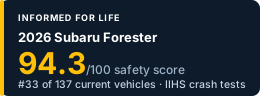
Free to use with the link left intact. The badge is a plain image and an ordinary link, with no tracking script.
Questions about the 2026 Subaru Forester
Continue comparing
Shopping for a family? Compare three-row vehicles and rear-seat evidence. Buying used? See real driver death rates by model.